Case study
Unifying four products into one suite, and the org redesign behind it
How we consolidated four collaboration products into a single coherent app, with +20% session-share lift in six months, +4.18% CES, and zero forced upgrades.
Context: why this project existed
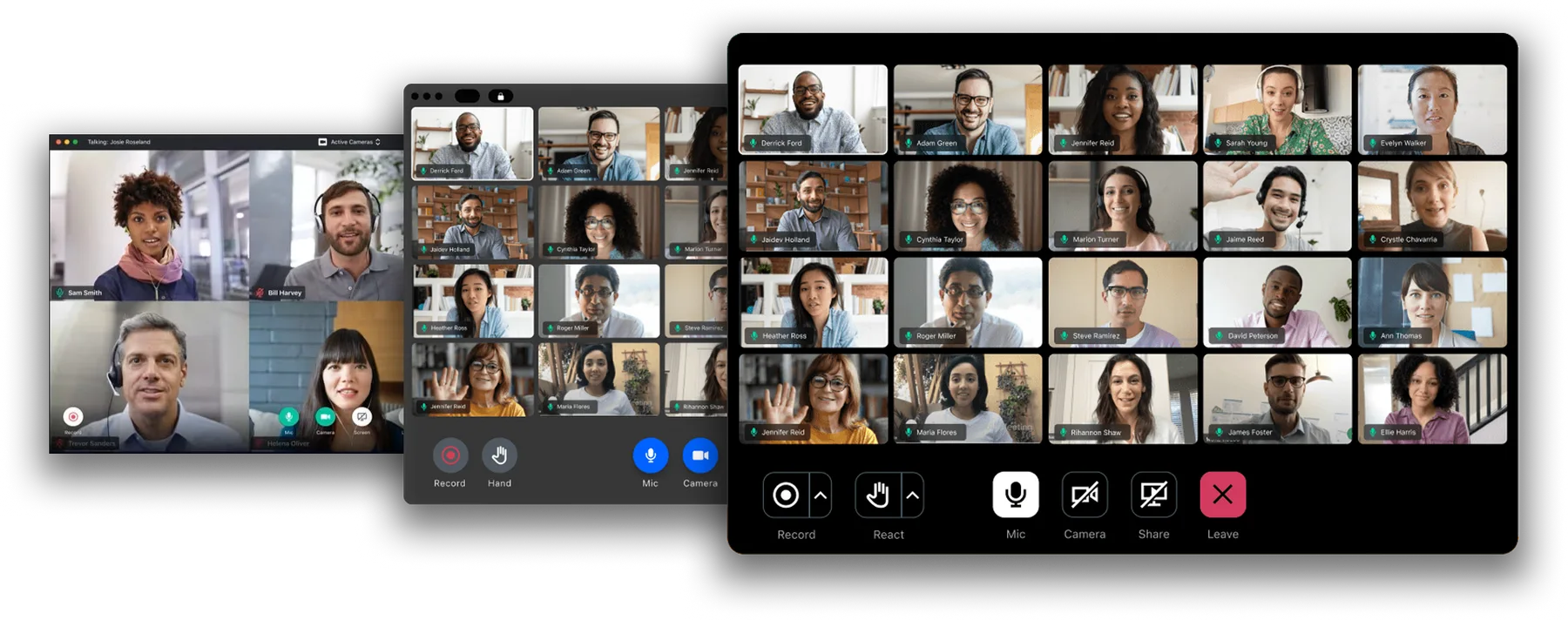
We began to see our products as pieces of a larger puzzle, capable of coming together to support the wide variety of workflows our users relied on daily. This shift required more than harmonizing the design and user experience across the products. It meant introducing entirely new ways for users to move seamlessly between them, with escalation flows that adapted to their needs in the moment.
At the same time, we aimed to align with business priorities by making the solutions more intuitive for buyers, while optimizing the technology stack to reduce costs and accelerate delivery.
Three things had to be true at once:
- Empower users to thrive in their work life: in-office, remotely, or in a hybrid setup.
- Rebuild the products in a cohesive way that supported users, admins, and buyers’ workflows (three audiences, not one).
- Streamline the technology platform and speed up delivery of requested features.
This wasn’t a product refresh. It was a strategy reset: from a portfolio of best-in-class point products to a suite that earned its own coherence.
My role
This chapter asked for three kinds of work, weighted heavier on organizational design than the GoToMeeting rebuild before it.
Organizational leadership
- I made the case to leadership that we couldn’t ship a unified product out of siloed teams. Conway was right: organizations design systems that mirror their own structure. I led the design-org redesign around the suite, dismantling the product-silo boundaries that had constrained previous attempts at integration.
- I expanded ownership principles across multiple products and stood up the first Accessibility Lead role at GoTo: discipline-level commitment the unified suite required, growing a mid-level IC into the position.
- I supported and championed the broader cross-functional reorganization, working with Product and Engineering leadership to move from per-product structures to suite-aligned ones.
- The redesigned structure released leadership behavior the old one had suppressed. With clearer territory and written-down decision rights, designers and managers led without waiting: the trust-and-ownership pairing turning out to be the second-order effect that mattered most.
Holistic product strategy
- I fostered an end-to-end mindset that treated design’s job as suite-coherence, not per-product completion. The frame: each individual product was a puzzle piece, and the value was in how the pieces fit together, not in polishing each piece in isolation.
- I shifted the team’s analytical frame from personas and journey maps to jobs-to-be-done (JTBD), a better fit for questions that span products (e.g., “I need to escalate a chat into a meeting into a recorded session”) than single-product flows.
- I balanced three audiences in every major design decision: end-users (who lived in the product), admins (who deployed and managed it), and buyers (whose criteria differed materially from end-users’).
Cross-functional partnership at altitude
- I sat in the same strategic forums as my Product and Engineering counterparts at the VP and Director level. Roadmaps were co-authored across the three disciplines, not handed over.
- I drove the rebrand translation into product surfaces, how a corporate identity change (LogMeIn → GoTo) became coherent design language: voice, motion, accessibility commitments. We took Marketing’s inputs and built them into the unified app so it shipped with the new identity, not retrofitted to it.
- I worked closely with Research to keep the JTBD frame grounded in real user behavior rather than abstracted into theory.
Discovery: designing the right things
This time the focus wasn’t on inventing something entirely new. It was on unifying the main products into a coherent suite without diluting what each had earned. We began by assessing what we had.
- Product audit and feature inventory. We listed and compared each product’s features, identified overlaps and gaps, and decided which current implementations offered the best user experience. The audit doubled as a forcing function for cross-team conversations that had been deferred for years.
- User flow remapping and IA reconciliation. We examined how different tools and features were being used and how they could be unified into one seamless experience without overwhelming users. Here we shifted from personas and journey maps to jobs-to-be-done, a better frame for the cross-product flows the suite needed to support.
- Technical-feasibility partnership. Merging the products into a suite wasn’t a question of whether but how. I partnered with Engineering leadership to make technical-feasibility analysis a parallel workstream to design, not a downstream gate.
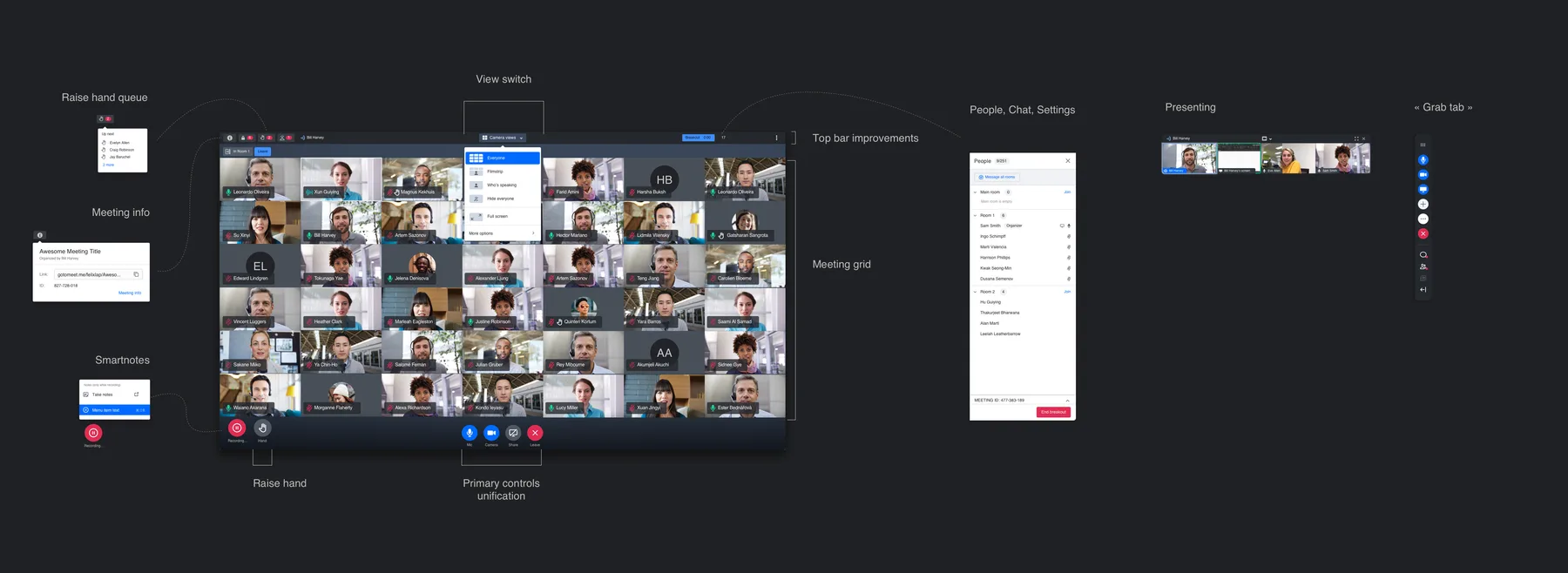
- Design-system expansion. We pushed Chameleon further to ensure visual and functional consistency across the entire suite, while also reflecting the new brand values (LogMeIn → GoTo).
Designing things right: the suite, the rebrand, the migration
With the new JTBDs in hand, we treated the products as puzzle pieces that could combine in various ways to support different workflows. This meant not only harmonizing the look and feel of the former products, but introducing new escalation flows (patterns for moving smoothly between products), and ultimately building a single unified app that bundled the suite together.
Breaking down the silos
“Organizations which design systems are constrained to produce designs which are copies of the communication structures of these organizations.”
Melvin Conway
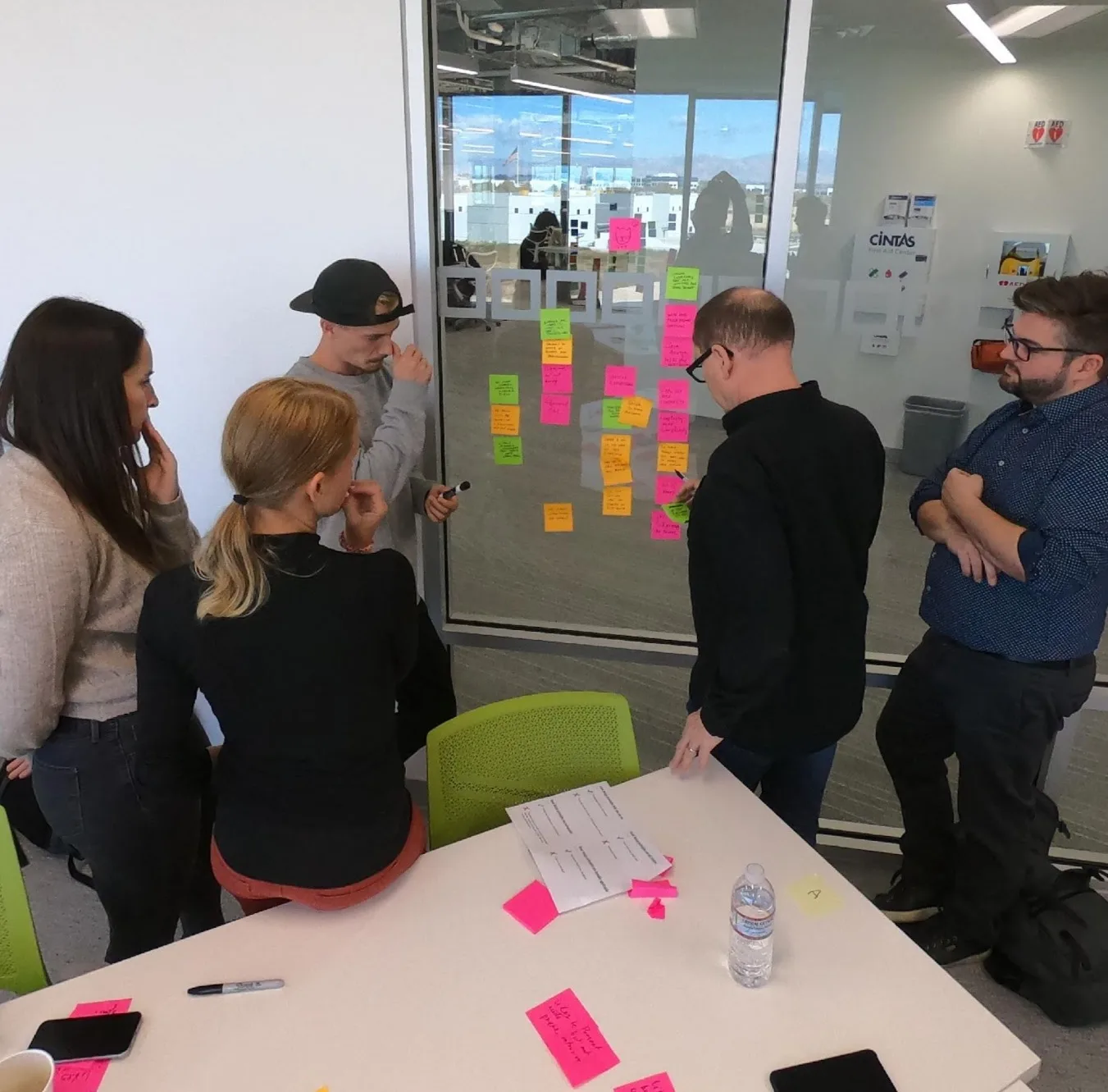
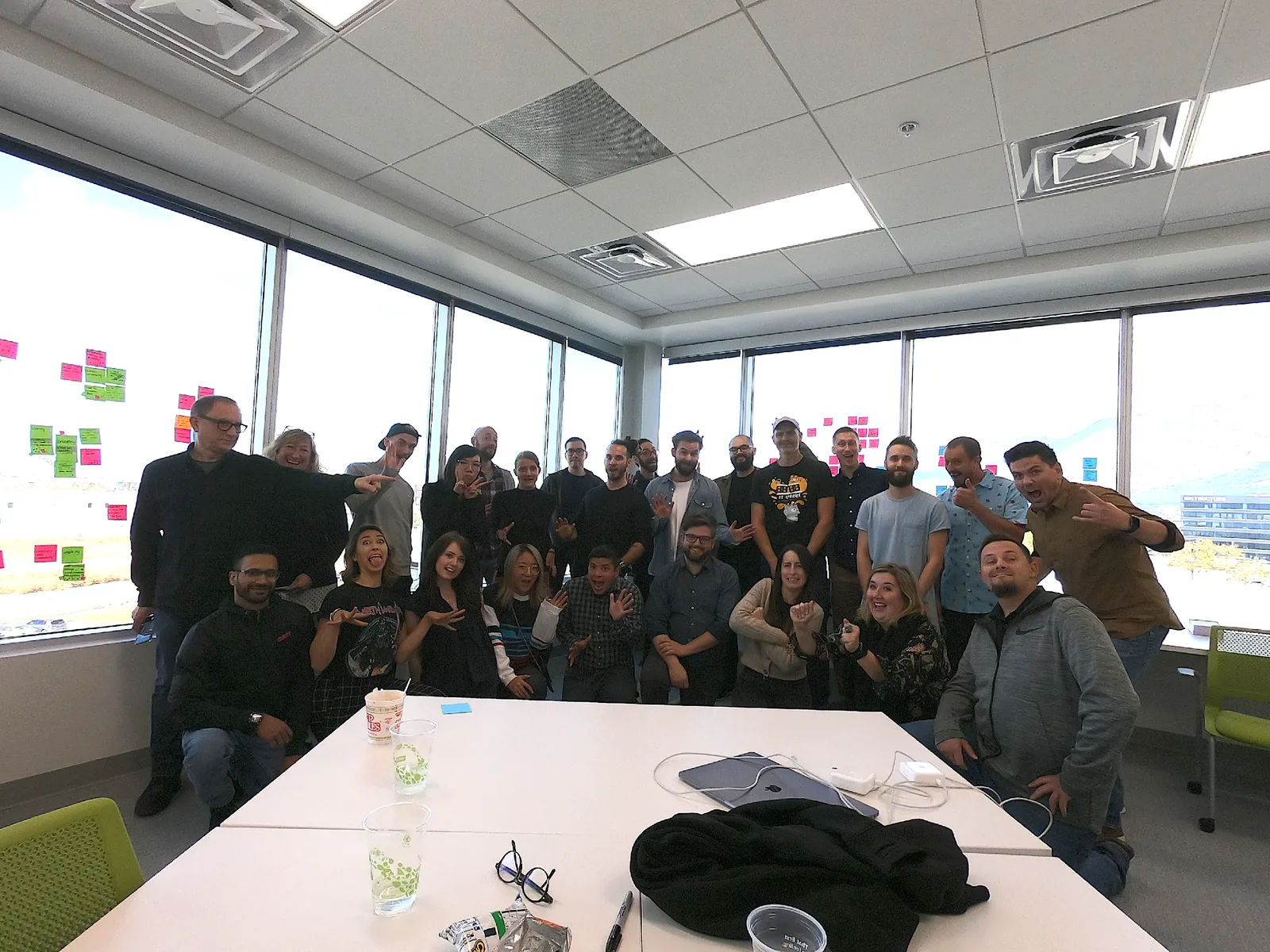
This is why we had to redesign the org as part of redesigning the product. To break the boundaries between our products, we had to break the product-silo structure of the design team, and partner with Product and Engineering leadership to do the same on their side. The org redesign wasn’t a side effect of the product work. It was a precondition for it.
New design principles for aligned decisions
Design principles and systems served as conversation platforms across the three disciplines, aligning design and experience decisions while fostering mutual trust. We wrote new suite-level principles to govern questions a single-product principle set couldn’t answer: how to introduce a feature that lives across products, how to handle authentication and identity across the suite, how to design escalation flows that feel native rather than bolted on.
What the rebrand actually meant for design
The LogMeIn → GoTo rebrand wasn’t a brand exercise. It was a strategy reset. LogMeIn became GoTo to reflect that we no longer sold individual remote-work tools but a suite for hybrid work.
My role on the design side was to translate the new brand values into product surfaces: visual system, voice, motion, accessibility commitments. We worked from the Marketing inputs and principles, and we held the line that the unified app would ship with the new brand, not be retrofitted to it later.
The migration
We applied the same migration philosophy as on the GoToMeeting rebuild: no forced upgrades. Existing customers chose when to move. The unified app shipped, the previous products remained available, and migration paths were designed to make moving feel like an upgrade rather than a tax. This took longer than a forced cutover. It preserved trust, and the +20% session-share lift in the first six months told us we’d earned the migration rather than imposed it.
Outcomes
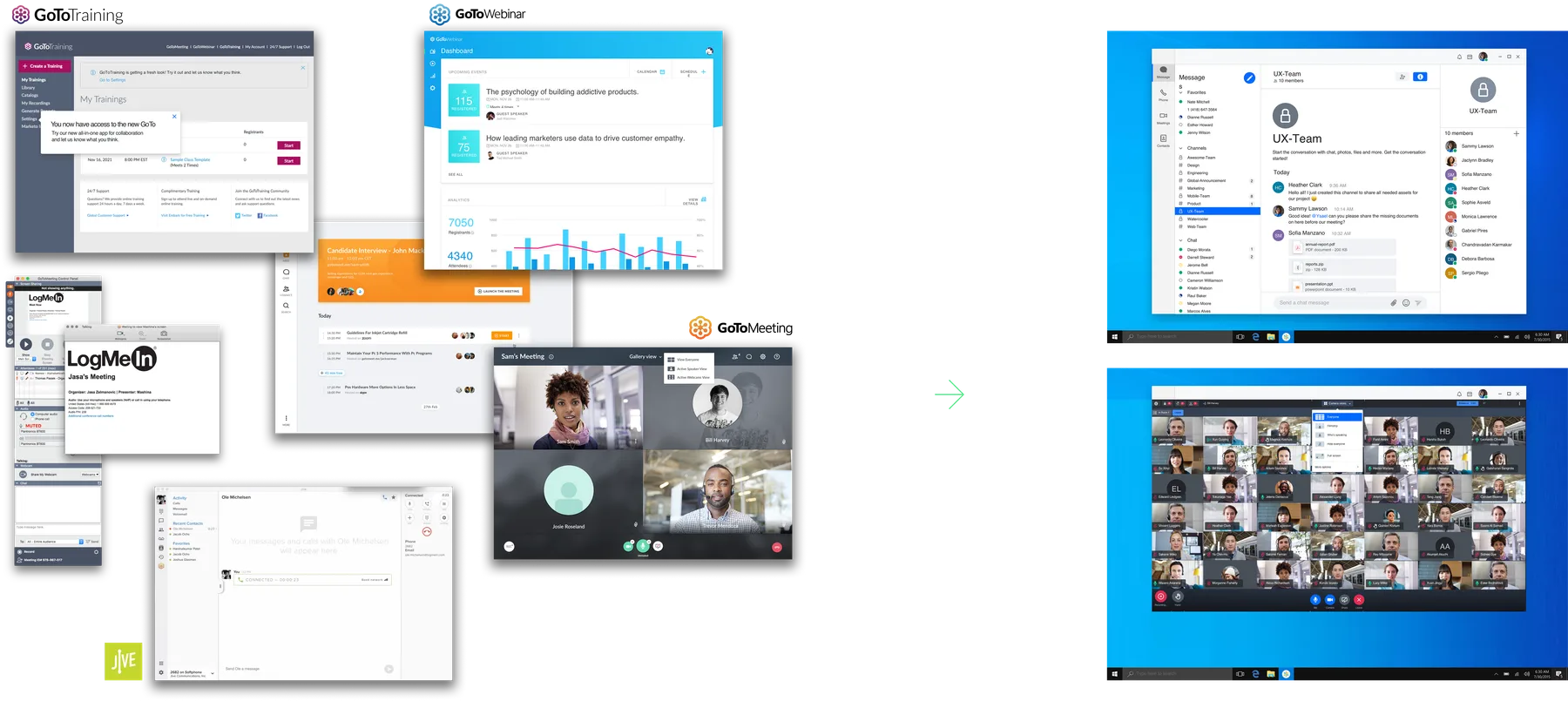
- +20% session-share lift in under 6 months: measurable migration toward the unified surfaces, ahead of the org’s forecast.
- +4.18% CES after unification and rebrand: customer effort improved through the transition, not despite it.
- No forced upgrades. Existing customers migrated on their own timeline; the suite earned the adoption.
- First Accessibility Lead role stood up at GoTo: discipline-level commitment the unified suite exposed and the previous portfolio structure hadn’t required.
- Design organization restructured around the suite, dissolving the product-silo boundaries that had constrained prior unification attempts.
What I’d do differently
Two things, both about sequencing.
The technical-feasibility track moved faster than the org-design track, which meant some teams were ready to ship the unified surfaces before the org structure had caught up. I’d front-load the org redesign next time: hold the engineering merger by one quarter to let the team boundaries settle. Shipping fast against a structure that’s still re-forming creates rework that more than offsets the speed gain.
We also under-invested in customer-success and sales enablement during the migration. The unified-app value story should have been in the hands of CS and Sales two months before customers were asked to migrate, not two weeks. The feedback we got from CS in the first month of the migration was the right feedback; it just arrived later than it should have, because we hadn’t enabled them earlier. Director-level design work is partly about anticipating which functions need to be brought into the work, and when. I’d weight that earlier next time.
Want to go deeper?
The full project deck (screens, before/after work, migration data, and learnings I haven't surfaced publicly) is available on request.